Focused business website
For a small or medium business that needs a dependable service explanation, trust information and clear enquiry routes.
A practical guide for Sabah businesses planning a new website, redesign or long-term digital platform. Understand website types, content responsibilities, mobile and SEO foundations, cost factors, project process and support before choosing the right scope.
A website is often a customer’s first meaningful interaction with a business. Before making an enquiry, people want to understand what the organisation provides, whether it appears credible and how to take the next step. A professional website brings those answers together in a structure that is available beyond office hours and easy to use across devices.
Pixelbah plans each page around real audience questions and business priorities. Clear services, useful navigation, readable content and visible contact paths help visitors move from discovery to action. The website becomes a long-term digital asset that can improve as services and customer needs evolve.
Professional design connects credibility, clarity and customer experience. Visual quality must support understandable content, accessible interaction and confident decision-making. A polished page that hides important information or performs poorly on mobile does not serve the business well.
A well-planned website supports discoverability, enquiries and long-term ownership. It gives search engines a clearer structure, gives campaigns a dependable destination and reduces reliance on a single social platform. Pixelbah focuses on a maintainable foundation rather than unsupported promises.
Customers in Sabah compare businesses online before contacting them. A modern website helps an organisation explain its location, services, availability and process to customers in its own town and elsewhere in Malaysia. This is valuable for tourism, accommodation, transport, education, churches, retail and professional services.
Mobile usability matters when visitors are travelling or ready to contact a business. WhatsApp can remain the primary conversion channel while the website builds trust and provides structured information before the conversation begins.
Planning across Sabah
A useful brief starts with customers, information and operations. It does not need to prescribe technology before the requirements are understood. Businesses outside Kota Kinabalu can complete discovery, content review and approvals through structured online consultation when responsibilities and decision makers are clear.
Choosing the right scope
For a small or medium business that needs a dependable service explanation, trust information and clear enquiry routes.
For several audiences, departments, locations, programmes or governance requirements that need structured navigation.
For one defined audience, offer and action connected to advertising or outreach without replacing the main website.
For organisations publishing programmes, articles, announcements, events or other information that needs a maintainable structure.
For operational requirements that justify product, payment, scheduling, account or data workflows after detailed discovery.
Content and search readiness
Service details, customer questions, approved photographs, business information and policies shape both design and credibility. English and Malay content need clear editorial ownership so both versions remain accurate after launch rather than becoming unsynchronised copies.
An SEO-ready foundation can include semantic headings, unique metadata, canonical URLs, sitemap entries, structured data, internal links and mobile performance considerations. These help search engines understand the website but do not guarantee a ranking position.
Cost and selection guidance
Website cost depends on page count, design requirements, content, languages, integrations, CMS, SEO and support. Pixelbah reviews the requirements before preparing a scope and quotation. The initial consultation is free, including for Sabah clients who manage the project remotely.
Service hierarchy
This guide supports businesses across Sabah that are planning scope, content, technology and long-term ownership. Businesses specifically seeking a local commercial consultation in Kota Kinabalu can use the focused service page, while the complete service page defines Pixelbah's broader website-delivery scope.
11 solution types can be considered; final functionality depends on the agreed project scope.
Features are selected according to requirements and are not all included automatically.
Clarify goals, users, challenges, stakeholders and required functionality.
Define scope, information architecture, priorities, risks and conversion paths.
Map pages, messages, evidence, languages and required assets.
Create responsive layouts aligned with the approved brand.
Build the interface, integrations and technical SEO foundation.
Review content, accessibility, forms, performance and browsers.
Complete checks and plan maintenance or optimisation.
Website architecture
A cornerstone website project connects business discovery, user experience, interface decisions, technology, launch governance and improvement after launch. Each stage should answer a different question and leave the organisation with clearer ownership.
Define the business goal, audiences, existing evidence, stakeholder approvals, required functions, constraints and ownership before selecting layouts or technology. Discovery reduces the risk of building attractive pages around incomplete assumptions.
Map the questions visitors need answered, the order in which they need information and the shortest reasonable path to a useful action. UX includes navigation, content grouping, form effort, error states and mobile behaviour—not only visual wireframes.
Translate the approved brand and content hierarchy into consistent interface components. UI decisions cover typography, contrast, spacing, controls, images and feedback states. Responsive design adapts the same essential information for desktop, tablet and mobile rather than treating mobile as a reduced afterthought.
Choose a content workflow according to who updates the website, how often information changes and which design controls should remain protected. A CMS is valuable only when permissions, training, review, backups and ongoing content ownership are understood.
Use semantic HTML, meaningful headings, metadata, canonicals, hreflang where relevant, internal links, sitemaps and structured data. Accessibility work considers keyboard access, labels, alternatives, contrast and readable structure. These foundations improve interpretation and usability without guaranteeing rankings or universal compliance.
Optimise images, fonts, code and third-party scripts while protecting layout stability and interaction. Apply HTTPS, maintained dependencies, sensible access and careful form handling. Performance and security are ongoing responsibilities affected by hosting, content, integrations and maintenance.
Validate approved content, forms, links, redirects, indexability, analytics, responsive layouts and browser behaviour. Record account ownership, repository or CMS access, domain and hosting responsibilities, recovery expectations and items excluded from post-launch support.
Maintain the supported platform under a defined agreement, and use privacy-aware analytics, Search Console evidence, enquiries and recurring customer questions to prioritise improvements. Measurement informs decisions; it does not turn uncertain market outcomes into guarantees.
List the people who use the website and the decisions each group needs to make. A corporate buyer, local customer, prospective student and returning member may need different evidence and navigation. Prioritising those journeys prevents one homepage from carrying every message and clarifies which pages deserve their own search intent.
Identify the service facts, photographs, company information, policies, project examples and approvals available for publication. Design cannot replace missing evidence responsibly. Content gaps should become named client responsibilities, production tasks or post-launch phases rather than being filled with generic claims that are difficult to maintain.
Separate essential functions from desirable ideas. Forms, bookings, payments, catalogues, portals and external systems introduce different access, security, testing and support responsibilities. Each integration should have an owner, failure path and ongoing cost before it becomes part of the committed solution.
For English and Malay delivery, decide who approves meaning, terminology and later updates. Both versions should preserve essential facts and actions while reading naturally. Canonical and hreflang relationships support discovery, but editorial governance is what prevents one language from becoming incomplete after launch.
Define which actions represent useful progress and what data is genuinely needed. Page views, consultation CTA interactions and destination domains may be sufficient for initial decisions. Form values, phone numbers, email addresses and message content should not be copied into analytics simply because a platform makes custom tracking possible.
Agree what happens after publication: who checks enquiries, renews services, updates content, reviews Search Console, responds to incidents and approves improvements. A website is more sustainable when launch is a controlled handover into named operational responsibilities rather than the end of all planning.
| Website type | Suitable for | Advantages | Recommended use cases |
|---|---|---|---|
| Corporate website | Established organisations and multi-service companies | Structured credibility, governance and stakeholder information | Company profile, capabilities, locations, careers and formal enquiries |
| SME website | Owner-led and growing businesses | Focused scope, clear services and practical contact paths | Local services, professional practices and businesses moving beyond social-only visibility |
| Landing page | One campaign, programme or offer | Tighter message and action hierarchy | Google Ads, events, recruitment, product launches and lead qualification |
| E-commerce website | Businesses prepared for catalogue and order operations | Connected product discovery and transaction flow | Approved catalogues, payments, fulfilment and customer-service processes |
| Custom platform | Organisations with defined workflows beyond standard content | Purpose-built roles, data and interactions | Portals, bookings, directories, membership or specialist information systems |
| Decision | Landing page | Full website |
|---|---|---|
| Scope | One audience, offer and primary action | Multiple services, audiences and trust requirements |
| Navigation | Intentionally limited | Broader structured discovery |
| Best timing | Defined campaign with a ready destination | Long-term business presence and content foundation |
| Relationship | Can sit within a wider website | Can host several focused landing pages |
An SEO-ready website uses semantic HTML, logical headings, useful metadata, canonical URLs, sitemap and robots directives, structured data, internal linking and indexable server-rendered content. Mobile usability, performance and accessible navigation also support the technical foundation.
This helps search engines crawl and understand the website, but it does not guarantee immediate first-place rankings. Sustainable visibility also depends on competition, useful content, authority, local relevance and ongoing measurement.
Responsive layouts adapt content without hiding essential information. Pixelbah considers readable typography, touch-friendly controls, mobile navigation, suitable image sizes, stable layouts and easy access to WhatsApp or enquiry actions.
Testing covers representative desktop, tablet and mobile widths. Third-party tools are reviewed because they can introduce overflow, slow interaction or controls that are difficult to use on smaller screens.
Performance work may include image and font optimisation, code splitting, removing unnecessary scripts, layout-stability safeguards, appropriate caching and testing. The approach depends on the platform, media, hosting and integrations.
Pixelbah does not promise a fixed PageSpeed score because results change with content and third-party services. The aim is a practical, fast and stable experience that can be measured after launch.
Security begins with HTTPS, careful form handling, sensible access control and maintained software or dependencies. Where included, backups, monitoring and update routines help reduce avoidable risk. No public website can honestly be described as permanently risk-free.
Maintenance coverage depends on the selected agreement. Responsibilities for hosting, domain renewals, updates, backups, content changes and technical support are explained before launch.
Technology is selected for the scope; not every item is used in every project.
Career Platform
A career platform organising opportunities and guidance for its intended users.
mykerjaya.myEducation
A higher-education website presenting courses, campus information, academic resources and enrolment paths.
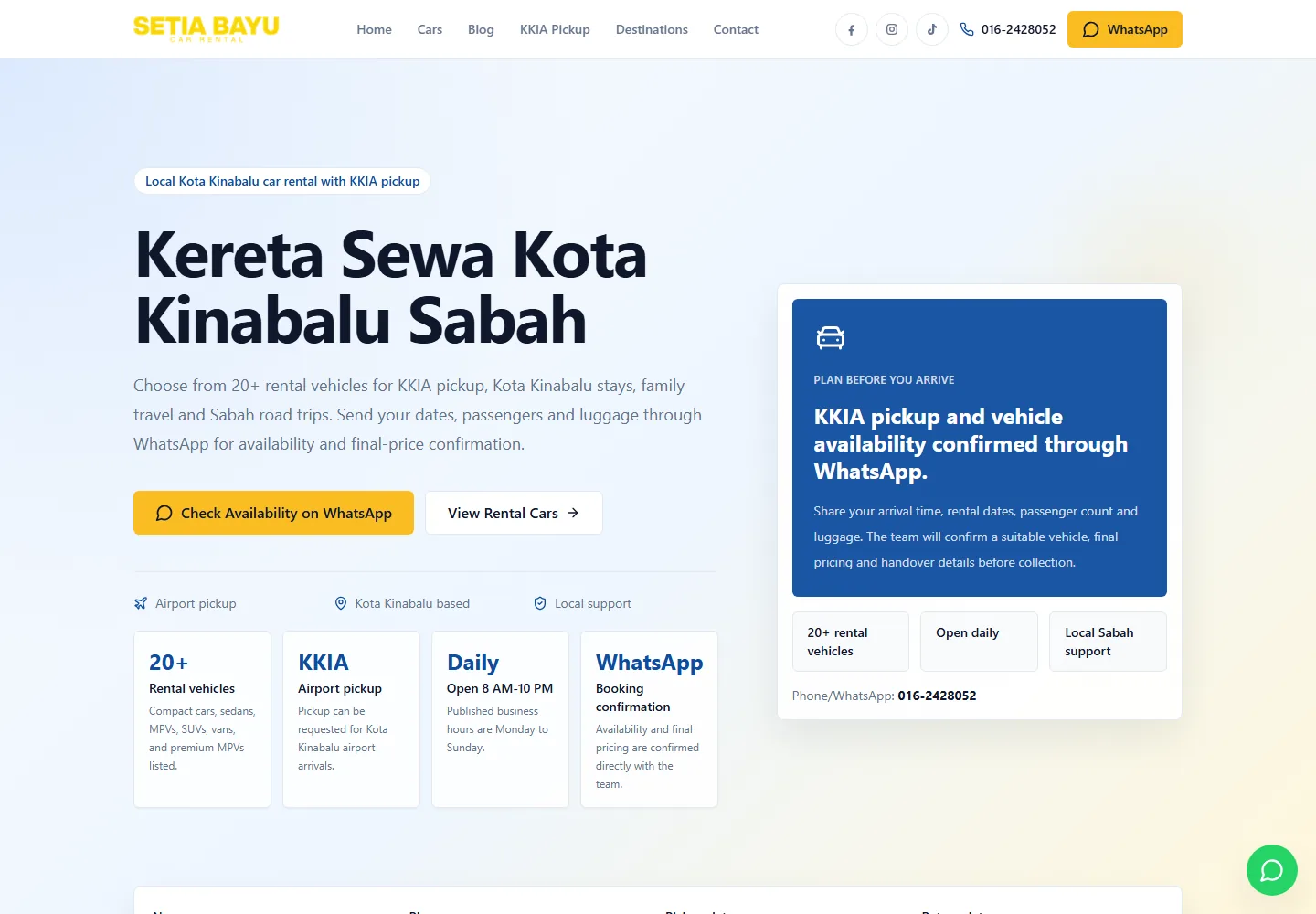
atc2u.edu.myAutomotive
A public car rental website structured around vehicle information, rental enquiries and customer contact.
setiabayu.comElevator Engineering & Services
A corporate website presenting elevator solutions, services and company information.
https://dnelevator.comInsurance Adjusting & Investigation
A corporate website presenting insurance adjusting, investigation services, company information and contact paths.
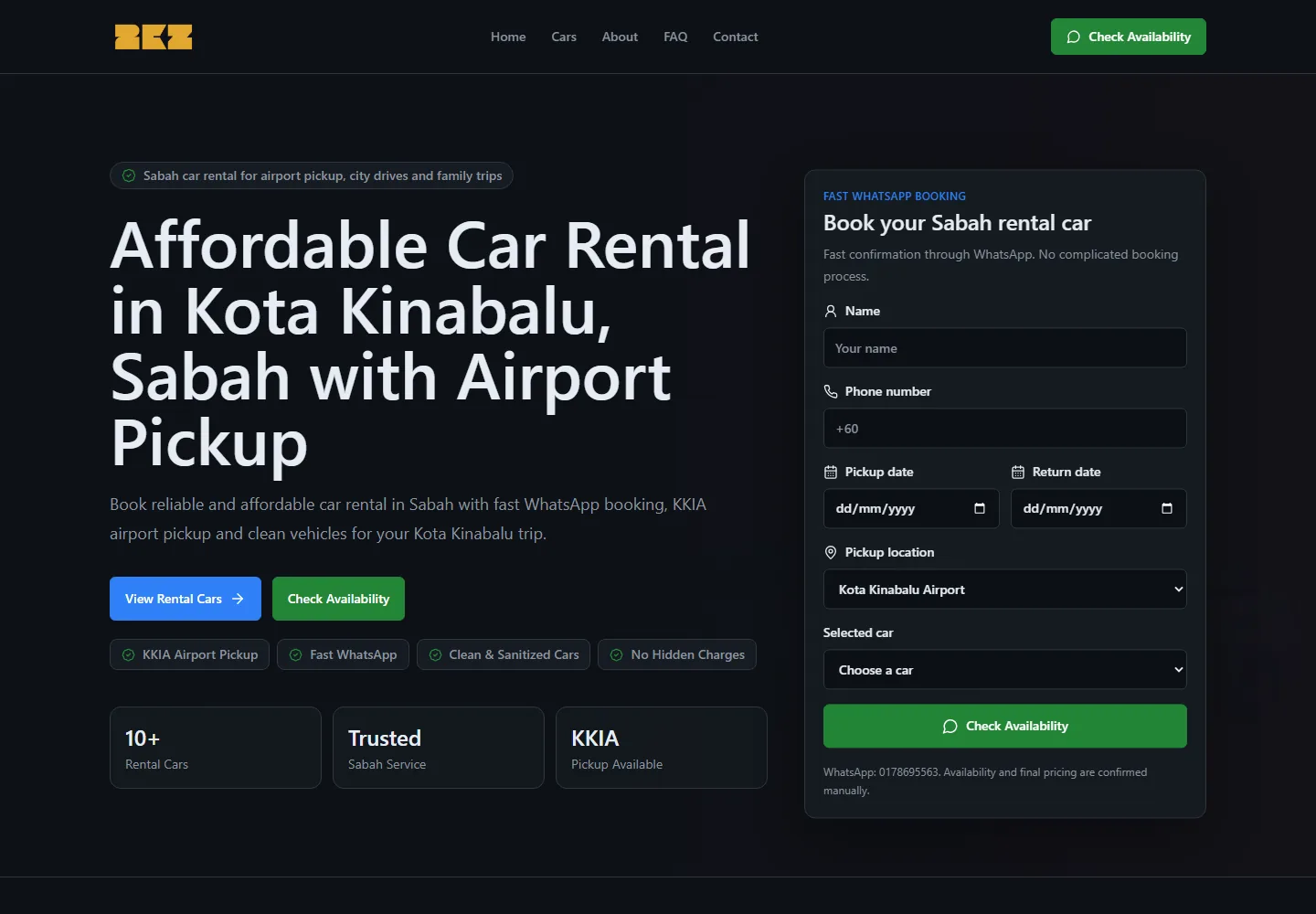
https://amanadjusters.comAutomotive
A car-rental website structured around vehicle discovery and direct booking actions.
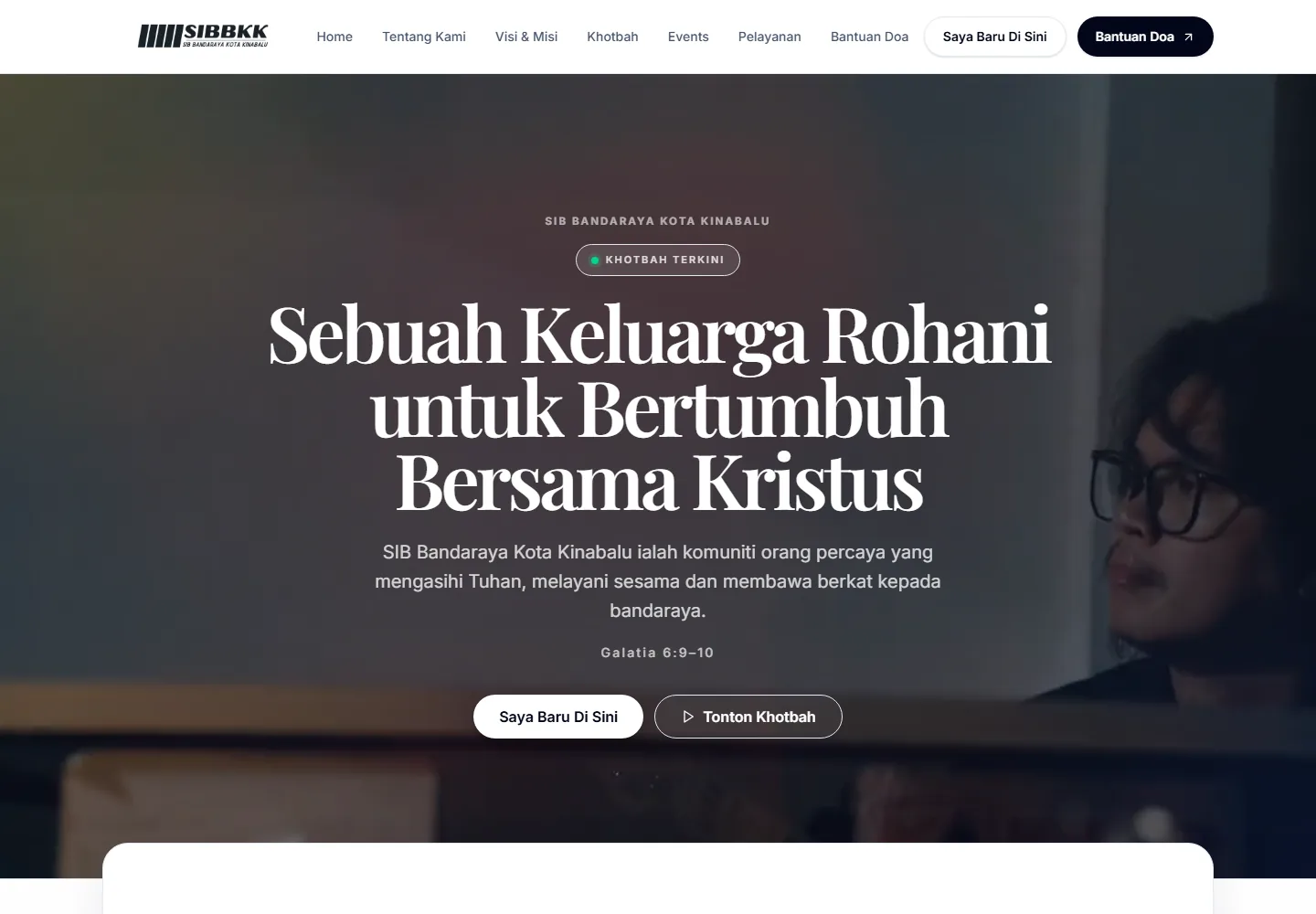
https://2kz.myOrganization
A church website providing public information, ministries, events, announcements and sermon content.
sibbkk.comA quotation is shaped by page count, design complexity, content readiness, languages, e-commerce or booking functions, custom integrations, CMS requirements, SEO scope, maintenance and urgency. These factors are discussed before defining a non-binding scope and quotation.
A focused business website may take several weeks. Larger multilingual or custom platforms require more discovery, production and testing. A schedule is confirmed only after requirements and review responsibilities are understood.
Strong projects define who supplies service details, photographs, legal information, policies and final approvals. Pixelbah can help organise the page structure and content requirements, but accurate business information must come from authorised owners. Agreeing responsibilities early prevents design decisions from being made around missing material and makes bilingual review more reliable. Content should answer customer questions, use verifiable claims and remain maintainable after launch.
A conversion is the useful next step a visitor takes, such as requesting a quotation, opening WhatsApp, calling, completing an enquiry or viewing a relevant service. Pixelbah maps those actions to the visitor journey instead of placing the same button everywhere without context. The website should provide enough information to build confidence before presenting a clear action, with forms and contact routes kept proportionate to the decision being made.
Accessible design improves the experience for people using keyboards, screen readers, zoom, reduced motion or different input methods. Practical work includes semantic landmarks, logical headings, useful labels, visible focus states, suitable contrast and understandable link text. Accessibility is reviewed within the agreed scope and should continue as content changes. It is both a quality responsibility and a way to make important business information available to a wider audience.
Analytics can be integrated when approved, configured and supported by an appropriate privacy approach. Useful measurement starts with business questions: which pages attract relevant visits, which contact actions are used and where visitors stop progressing. Pixelbah avoids adding tracking merely because a tool is popular. The owner should understand account access, consent requirements and who will review the data, because collection without interpretation does not improve the website.
A sustainable website needs clear ownership of the domain, hosting, analytics, repository and third-party accounts. Pixelbah can recommend and configure suitable services, but renewal responsibilities, access and fees should be documented. The client should retain appropriate administrative control wherever practical. Technology choices also consider deployment reliability, backups, security, expected traffic and the people who will maintain the site after the initial project.
Booking, payments, maps, chat, email, CRM and social tools can extend a website, but every integration adds dependencies, privacy considerations, fees and potential performance impact. Pixelbah confirms the required workflow before selecting a service or custom connection. Third-party availability and approval remain outside the website developer’s control, so fallback behaviour, account ownership and maintenance responsibilities need to be considered in the project scope.
A launch is more than publishing files. Final checks cover approved content, responsive layouts, forms, links, metadata, indexability, redirects where relevant, analytics configuration, account access and basic recovery responsibilities. Pixelbah also confirms which items are included after launch and which require a maintenance agreement. A controlled checklist reduces avoidable surprises and gives the owner a clearer record of the delivered website.
Self-editing is useful when the organisation has people and processes to maintain content. The editing experience should match the frequency and complexity of updates rather than expose every design setting. Pixelbah may recommend a CMS, structured editing workflow or managed updates depending on the project. Permissions, training, backups and review responsibilities matter because outdated or inconsistent information can reduce confidence even when the underlying website is technically sound.
An English and Malay website needs a plan for translation ownership, editorial approval and future updates. Each language should communicate naturally to Malaysian readers and preserve the same essential facts without becoming a literal sentence-by-sentence copy. Technical relationships such as canonical URLs and hreflang support discovery, while navigation should keep language switching predictable. When one language changes, the owner should review whether its counterpart also needs an update.
Scalability means new services, industries, locations or articles can be added without weakening navigation or creating duplicate pages. Pixelbah plans page templates, internal links, metadata and content relationships around the likely roadmap. Growth should still be evidence-led: a future SEO landing page needs distinct user value and verified relevance, not only a changed place name. A maintainable architecture reduces the need for disruptive redesign as the content library expands.
A website benefits from observation after real users begin interacting with it. Search queries, enquiries, support questions, analytics and business changes may reveal content that needs clarification or new pages worth prioritising. Improvement can include technical maintenance, content refinement, SEO work and carefully scoped features. Pixelbah offers long-term support options, while the exact cadence and responsibilities depend on the selected agreement and the organisation’s internal resources.
Cost depends on page count, design complexity, content, languages, integrations, e-commerce or booking, CMS, SEO and support. Pixelbah discusses the business goal and required functionality before preparing a scope and quotation. A focused business website generally requires less work than a multilingual platform or custom system. The initial consultation is free, and work begins only after scope, responsibilities and quotation are understood.
A focused business website may take several weeks; a larger multilingual, e-commerce or custom platform normally requires more time. Timing depends on scope, content readiness, feedback, integrations and testing. Pixelbah establishes a practical schedule after discovery rather than promising one deadline for every project. Confirming decision makers, brand assets and content responsibilities early helps the project move efficiently.
Helpful information includes your goals, audience, services, preferred customer actions, required pages, brand assets, domain details and useful reference websites. Identify whether the site needs multiple languages, payments, booking, member access or integrations. You do not need a complete technical specification before contacting Pixelbah. Discovery organises the requirements and identifies what still needs preparation.
Responsive behaviour is central to the process. Layouts, typography, navigation, images, buttons, forms and contact actions are considered for desktop, tablet and mobile screens and tested at representative widths. Mobile support means content and actions adapt so they remain clear and usable; it does not mean every device renders identically. Third-party widgets are reviewed because they can also affect mobile usability.
The approved scope may include semantic HTML, logical headings, metadata, canonical URLs, sitemap and robots directives, internal links, structured data and mobile performance considerations. This SEO-ready foundation helps search engines crawl and understand the website, but it does not guarantee immediate rankings or first position. Keyword research, content development, local optimisation, authority building and ongoing measurement may require a separate SEO engagement.
Yes. A redesign can address outdated structure, unclear messaging, weak mobile usability, difficult content management or technical limitations. Pixelbah reviews the current website, useful content, URLs, available analytics and functions that must be preserved. Redirects and existing search visibility are considered so valuable pages are not discarded without a plan. The recommendation may be a focused improvement or broader rebuild.
E-commerce can be included when it suits the business model and scope. Requirements may cover products, inventory, payment providers, delivery rules, notifications, policies, administration and reporting. These details affect platform choice, cost and timing. Pixelbah discusses operations before recommending a solution. Payment, delivery and marketplace services remain subject to their own approvals, fees and technical limitations.
Yes. WhatsApp can be a clear contact action from navigation, service information or campaign pages, using an approved number and an appropriate pre-filled message. The website should still explain the business and service clearly before asking visitors to contact you. This lets WhatsApp remain a convenient conversion channel while the website supplies structured information and credibility.
An appropriate content management system can be included where required. The best approach depends on update frequency, who will maintain the site and how much control is needed. Some projects suit WordPress or another managed workflow, while tightly controlled pages may use a development process. Pixelbah explains editing access, responsibilities, training and support before launch.
Maintenance options can be discussed. An agreement may cover software or dependency updates, backups where applicable, monitoring, security checks, content assistance and technical support. Coverage depends on the platform and selected agreement; it is not automatically identical for every project. Hosting, domain renewals, subscriptions and major new features may be separate and will be documented clearly.
Technology is selected according to functionality, editing workflow, integrations, budget and maintenance. Pixelbah may use Next.js, React, TypeScript, JavaScript, Tailwind CSS, Node.js or WordPress where appropriate, with PostgreSQL for suitable data needs and Vercel or Cloudflare for deployment. OpenAI or Google Gemini APIs may support approved AI functions. Not every project uses every technology.
Yes. Pixelbah can plan English and Malay routes, navigation and metadata. A bilingual project requires natural localization rather than duplicated text, with correct canonical URLs and hreflang relationships. The parties should agree who supplies, reviews and approves each language. Additional languages increase content, review and maintenance requirements, so they are included explicitly in the scope.
Domain and hosting arrangements can be discussed. Pixelbah may recommend or configure a suitable service, but ownership, renewals, account access and third-party fees must be clear. Where practical, the client should retain suitable ownership and administrative access. The recommendation depends on technology, expected traffic, storage, email, security and maintenance requirements.
Custom booking, enquiry, portal or management functions can be developed when the workflow is defined and technically appropriate. Discovery covers roles, data, notifications, approvals, integrations, reporting, privacy and administration. Custom systems are usually scoped separately from marketing websites because they require more architecture, testing and maintenance. Pixelbah first evaluates whether a custom build or an existing integration is more practical.
Use the contact page or WhatsApp to describe your organisation, required website, languages, important features and preferred timing. Pixelbah will arrange an initial consultation to clarify goals, audience, content, functionality and responsibilities. Once requirements are understood, an appropriate scope and quotation can be prepared. The initial discussion is not a commitment, and the project scope is agreed before work begins.
The initial conversation is free. We will discuss your goals, required functions, responsibilities and suitable next steps before preparing a project scope and quotation.